MAC guns blog
MAC-10 vs. MAC-11: Differences, History, Collector Value & Authenticity — 2026 Identification and Buyer’s Guide
Jan
January 2014 | By: [ArmsReach]
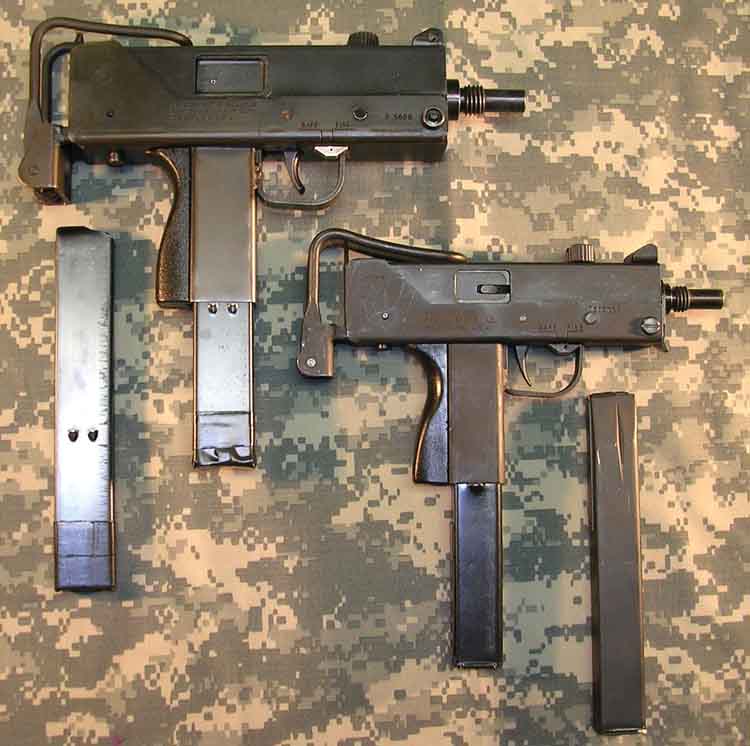
The MAC-10 vs. MAC-11 are among the most recognizable names in modern American submachine-gun history. Both are associated with the original Military Armament Corporation (MAC) and the compact firearms developed by Gordon B. Ingram. They are often discussed together, but they are not simply two sizes of the same collectible: their chamberings, dimensions, production histories, markings, and documented variants differ.
For collectors, the most important question is not which firearm was “better” in an operational sense. It is which specific example can be correctly identified, authenticated, legally documented, and valued against comparable examples. Original manufacturer, production period, configuration, provenance, condition, and transfer status can make a substantial difference to a particular item’s significance and market value.
This guide approaches the subject as historical and collector research. It covers visible identification, markings, originality, accessories, provenance, valuation and due diligence. It does not provide instructions for operating, modifying, converting, repairing, or optimizing automatic firearms. Receiver welds and selector markings are discussed only as non-invasive identification evidence; uncertain or potentially altered examples require qualified professional examination.
This is independent collector research, not a formal appraisal, legal opinion, or representation that I hold NFA-broker credentials. Laws governing machine guns and their transfer vary by jurisdiction. Confirm classification and legal eligibility with the relevant authorities and qualified counsel before any transaction.
1. The short answer: what separates the MAC-10 from the MAC-11?
The original MAC-10, officially designated the Model 10 or M10, was produced in both .45 ACP and 9mm versions. The original Model 11 or M11 was a smaller, lighter member of the Ingram family, originally associated with .380 ACP. The M11 was not simply a shortened M10 with a different name; it was a distinct model with its own production history and collector identity. archive.smallarmsreview.com+2
The comparison becomes more complicated because later manufacturers produced several MAC-pattern firearms, including the RPB M10 and M11, the SWD M11/Nine, and other commercial or commemorative variants. The term “MAC-11” is often used casually for more than one of these models, even though their markings, dimensions, chamberings, manufacturers and histories are not identical.
Quick comparison
| Collector category | Original MAC-10 / M10 | Original MAC-11 / M11 |
|---|---|---|
| Official model designation | Model 10 / M10 | Model 11 / M11 |
| Original chamberings | .45 ACP and 9mm | .380 ACP |
| General design identity | Larger Ingram submachine-gun family member | Smaller Ingram submachine-gun family member |
| Historical manufacturer | Military Armament Corporation | Military Armament Corporation |
| Early production association | Powder Springs and later Marietta, Georgia | Powder Springs and later Marietta, Georgia |
| Later production lineage | RPB, SWD and other makers | RPB, SWD and other makers |
| Common collector confusion | M10, M10/9, M10/45, semiautomatic M10-pattern pistols | M11, M11/380, M11/Nine, semiautomatic M11-pattern pistols |
| Key authenticity issue | Correct maker, caliber designation, receiver markings and provenance | Correct maker, caliber designation, receiver markings and provenance |
| Strongest collecting appeal | Original MAC history, documented variants and condition | Original M11 identity, scarce configurations and provenance |
| Valuation priority | Exact model and manufacturer before price comparison | Exact model and manufacturer before price comparison |
The practical collector’s conclusion: If the question is which is the more historically substantial original model, the M10 has the broader chambering and production story. If the question is which is more distinctive as a compact member of the original Ingram family, the M11 has a compelling identity of its own. Neither is automatically more valuable; the exact firearm and its documentation matter more than the model name alone.
2. Historical background: Gordon Ingram and the Military Armament Corporation
The MAC-10 and MAC-11 story begins with American designer Gordon B. Ingram and the commercial organization that became Military Armament Corporation. The company brought Ingram’s compact submachine-gun designs to market and developed a recognizable family of firearms that later became widely known by the MAC name.
The history is not a simple story of one company manufacturing one model continuously. Corporate disputes, a move between Georgia facilities, bankruptcy and the sale of company assets created a complicated manufacturing lineage. That history is important because collectors encounter examples marked with different company names and addresses.
Small Arms Review documents the transition from the early Ingram and Sionics associations to the Military Armament Corporation name. It also describes the company’s move from Powder Springs to Marietta and the subsequent change in markings. Small Arms Review+1
Powder Springs and Marietta
Powder Springs, Georgia, is particularly important in MAC collecting. Early firearms and historical documentation associated with the original company are commonly discussed in connection with this location.
The company later moved to Marietta, Georgia. The change of address is one of the historical details that collectors may encounter in receiver markings and original literature. It should be treated as evidence to investigate—not as an automatic indicator of rarity or value.
A collector researching an example should establish:
- Which company name appears on the firearm.
- Which address appears in the markings.
- Whether the address is consistent with the claimed manufacturing period.
- Whether the serial number and model designation are consistent with the claimed identity.
- Whether the firearm’s documented history supports the seller’s description.
The company’s internal dispute also matters. According to the historical account published by Small Arms Review, Gordon Ingram and Mitch WerBell were forced out of the company in May 1972, after which the company standardized the MAC name in its firearm markings and literature. Earlier Ingram-marked receivers remained part of the broader historical story. archive.smallarmsreview.com
The end of the original company
Military Armament Corporation experienced financial difficulties and entered bankruptcy in the mid-1970s. Its assets and manufacturing rights later became part of the story of successor businesses, including RPB Industries.
That transition explains why collectors may find firearms with mixed historical associations: an earlier receiver marking, a later manufacturer’s name, or documentation that refers to a company other than the one visible on the firearm.
This is not automatically evidence of fraud or an incorrect firearm. It does mean that the collector must distinguish between:
- The original manufacturer.
- The company that later acquired manufacturing rights or assets.
- The company that assembled a particular example.
- The company whose name appears in the legal manufacturer or importer markings.
- The company that sold or distributed the firearm.
A seller who uses “original MAC” as a broad label for every later MAC-pattern firearm is not providing enough information for a serious collector.
3. MAC-10 history and model identity
The M10 is the larger of the two original models in this comparison. It is associated with .45 ACP and 9mm variants, and its historical record includes the original Military Armament Corporation period as well as later production by successor businesses.
The model is often called the MAC-10 in collector conversation, although M10 is the formal model designation used in historical documentation. The distinction matters because the M10 family includes different chamberings, manufacturer markings and production histories.
The M10/45 and M10/9
The two best-known original M10 chambering identities are:
- M10/45: the .45 ACP version.
- M10/9: the 9mm version.
A collector should not treat these as interchangeable names. They are distinct variants, and market comparisons should be made between examples of the same model and manufacturer where possible.
The historical material from Small Arms Review describes both .45 ACP and 9mm versions within the original M10 family. archive.smallarmsreview.com+1
Why the M10 attracts collectors
The M10 is historically significant for several reasons:
- It represents the central design in the original Ingram/MAC commercial story.
- It was produced in more than one chambering.
- Its manufacturing history spans the original MAC organization and later successor companies.
- Its markings provide a useful record of the company’s changing identity.
- It is represented in museum, reference and collector literature.
- It became a recognizable part of the wider history of compact submachine guns.
The model’s historical importance should not be confused with a guarantee of financial appreciation. Collector demand varies by exact maker, condition, provenance, legal status and market conditions.
4. MAC-11 history and model identity
The original M11 was developed as a smaller member of the Ingram family and is historically associated with .380 ACP. It has a separate model identity from the M10, even though the two share the broader MAC design heritage.
Small Arms Review describes the M11 as a scaled-down development of the M10 family and identifies .380 ACP as its original chambering. Small Arms Review+1
The original M11 is not the same as the M11/Nine
One of the most important collector distinctions is between the original .380 M11 and the later M11/Nine.
The M11/Nine was introduced by SWD as a 9mm model based on the earlier M11 family. It is a separate commercial and historical identity, not simply an original .380 M11 with an alternative label.
Small Arms Review identifies SWD as the company that introduced the M11/Nine and discusses the distinction between the earlier .380 M11 and the later 9mm variant. archive.smallarmsreview.com+1
For collectors, this distinction has major consequences:
- A seller’s use of “MAC-11” may refer to the original .380 model or a later 9mm variant.
- A comparison against an