MAC guns blog
Modern MAC Firearms: Collector’s Identification, Authenticity & Valuation Guide
Oct
October 2015 | By: [MacGuns]
A Historical and Due-Diligence Guide to MAC 1911s, Shotguns, Brand Revival and Vintage MAC Firearms
Understanding manufacturer identity, historical markings, originality, collector condition, provenance, and market valuation.
Introduction: Understanding the MAC Firearms Legacy
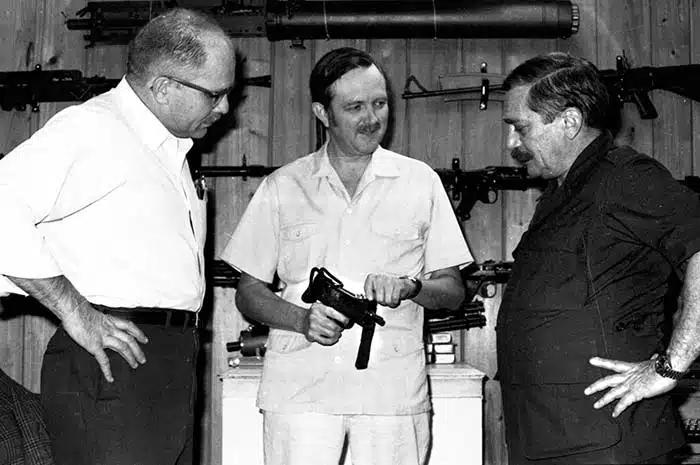
Modern MAC Firearms name occupies an interesting position in American firearms history. Its association with Military Armament Corporation, historically recognized MAC designs, and subsequent commercial branding has created a collecting landscape in which accurate identification is particularly important.
For collectors, one of the greatest challenges is distinguishing historically significant Military Armament Corporation firearms from later products, commercial reproductions, and contemporary firearms carrying MAC-related branding.
This distinction becomes especially important when examining modern MAC 1911-style pistols, shotguns, vintage MAC-pattern firearms, and products associated with the revival of the MAC brand.
A model name alone does not establish historical authenticity, manufacturing origin, or collector value.
This guide examines the subject from a historical collecting and professional due-diligence perspective. It emphasizes documentation, independent authentication, condition assessment, regulatory compliance, and responsible valuation.
An important distinction: Modern MAC-branded 1911s and shotguns should not automatically be classified as original Military Armament Corporation machine guns. Their manufacturers, production histories, legal classifications, and collector markets may be entirely different.
1. Establishing Manufacturer Identity and Production Era
Before evaluating a MAC firearm, establish exactly which manufacturer produced it. The historical MAC name has appeared in several contexts, and later manufacturing or branding relationships should not be confused with original production.
Historical references document several important phases in the MAC-pattern firearms industry, including Military Armament Corporation, RPB Industries, and subsequent commercial production. Small Arms Review+1
Historical and commercial identification framework
| Production context | Historical significance | Collector documentation |
|---|---|---|
| Military Armament Corporation | Original MAC manufacturing heritage | Factory records, original markings, provenance |
| Powder Springs production | Important early manufacturing association | Period documentation and manufacturer attribution |
| Marietta production | Later historical production period | Production records and original markings |
| RPB Industries | Subsequent MAC-pattern manufacturing | RPB documentation and model identification |
| SWD production | Later commercial MAC-pattern history | Factory documentation and serial records |
| Contemporary MAC branding | Modern commercial product identity | Current manufacturer and importer records |
These are historical identification categories, not a universal serial-number decoder. A particular marking or serial prefix should never be treated as conclusive proof of production date, originality, or legal status.
Rollmarks and stamp documentation
A collector’s documentation file should distinguish between:
- Manufacturer identification.
- Model designation.
- Caliber designation.
- Country-of-origin markings.
- Importer markings, where applicable.
- Serial-number records.
- Inspection and proof marks.
- Historical ownership and transfer documentation.
I would not rely on a generic online serial-prefix chart to authenticate a machine gun. Serial-number interpretation must be supported by records from the appropriate manufacturer, qualified historical specialist, and relevant regulatory documentation.
For modern MAC-branded 1911s and shotguns, use the actual manufacturer’s records rather than assuming that historical Military Armament Corporation markings apply.
2. Visual Inspection and Condition Assessment
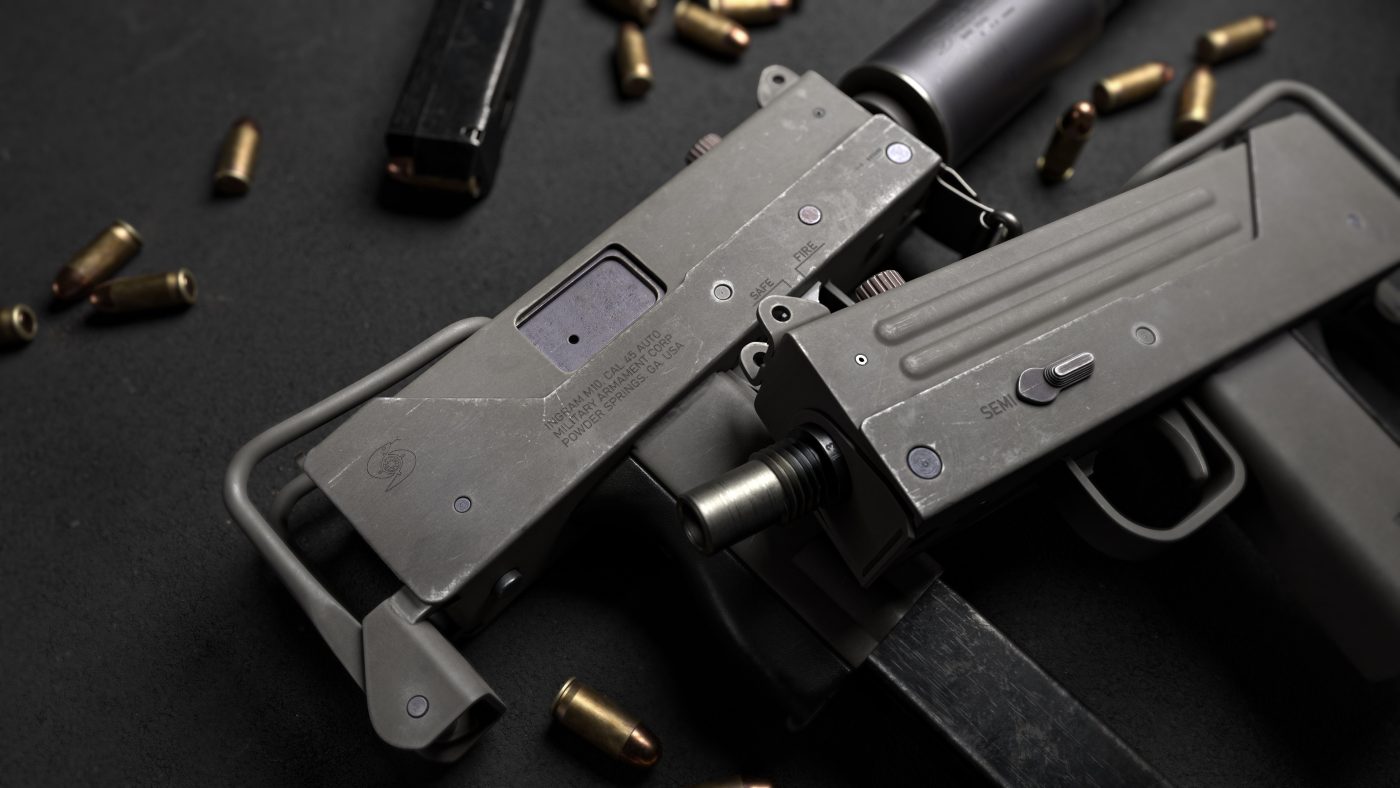
A professional collector assessment should begin with documentation and an external condition examination. Questions involving receiver weld integrity, selector mechanisms, bolt interchangeability, receiver-hole wear, or other internal mechanical alterations require an appropriately qualified firearms professional.
I can provide a safe authenticity and condition checklist, but not a technical forensic guide to evaluating or correcting machine-gun receiver modifications or restricted-firearm components.
Collector’s visual inspection checklist
- Manufacturer identity: Confirm the manufacturer named in the original documentation.
- Model designation: Verify that the documented model corresponds to the item being presented.
- Serial identification: Check that identifying information is consistent across lawful records.
- Exterior finish: Record visible finish wear, corrosion, discoloration, and evidence of refinishing.
- Markings: Photograph all visible manufacturer, importer, proof, and identification marks.
- Originality: Request documentation supporting factory-original configuration.
- Historical consistency: Compare the item’s claimed production period with reliable historical references.
- Accessories: Document accompanying original accessories separately from aftermarket additions.
- Packaging: Record original packaging, manuals, invoices, and historical paperwork.
- Professional examination: Obtain an independent assessment before assigning an authenticity grade.
Original finish versus refinished examples
Original finish can be an important consideration in historical collecting.
A refinished example is not automatically undesirable, but its condition should be disclosed accurately. A professionally documented restoration may be historically acceptable, while an undocumented alteration can introduce uncertainty.
The assessment should distinguish:
| Condition category | Description |
|---|---|
| Original finish | Supported by historical and manufacturer documentation |
| Professionally restored | Restoration history disclosed and documented |
| Refinished | Original surface treatment has been replaced |
| Modified | Changes from the documented original configuration |
| Unknown | Insufficient evidence to establish finish history |
Photographs alone cannot establish authenticity. Independent examination and supporting records remain essential.
3. Rollmark Authentication and Common Collector Pitfalls
Authentication is one of the most important parts of vintage MAC collecting. A firearm can have an attractive exterior appearance while its claimed manufacturing history remains uncertain.
The objective is to establish whether the firearm’s identity, history, and accompanying documentation are consistent.
Common authenticity concerns
| Concern | Why it matters | Recommended response |
|---|---|---|
| Suspected re-welds | May affect originality, structural integrity, and legal classification | Refer to an independent qualified specialist |
| Suspected counterfeit rollmarks | Can misrepresent manufacturer or production history | Request manufacturer or archival verification |
| Mismatched components | May indicate replacement, restoration, or undocumented modification | Obtain a written professional assessment |
| Altered identification markings | Can raise serious authenticity and legal concerns | Suspend the transaction pending regulatory review |
| Excessive wear | Can affect condition and historical completeness | Obtain a documented condition report |
| Inconsistent paperwork | May undermine provenance and legal-transfer confidence | Verify records through the appropriate authorities |
Understanding receiver and component originality
A particularly important distinction in MAC collecting is the difference between an original historical firearm, a professionally restored example, a commercial derivative, and a firearm assembled from different historical components.
These categories should never be treated as interchangeable.
A qualified specialist should independently assess any concerns involving receiver construction, welds, internal components, selector assemblies, or component compatibility.
Collector rule: Never purchase a purportedly transferable historical machine gun on the basis of photographs, seller assurances, or a serial-number chart alone.
4. Accessories and Original Package Completeness
Accessories can contribute to a collectible firearm’s historical completeness, but their value depends on authenticity, model compatibility, provenance, and documented association with the original firearm.
A large accessory collection does not automatically increase the value of the firearm itself.
Accessories and documentation assessment
| Item | Collector significance | Verification priority |
|---|---|---|
| Original magazines | Historical package completeness | Establish period and model compatibility |
| Nomex barrel cover | Potential historical accessory interest | Verify manufacturer and documented association |
| Original suppressor | Potentially significant historical accessory | Verify identity, legal status, provenance, and transfer eligibility |
| Original factory box | Packaging and presentation completeness | Match identification information |
| Factory manuals | Historical and documentary value | Verify edition and model relevance |
| Original warranty papers | Supporting manufacturing documentation | Check consistency with the firearm |
| Purchase invoices | Useful ownership-history evidence | Verify dates and seller identity |
| Historical accessories | May add research and presentation value | Establish authenticity and provenance |
Original magazines
Original magazines may contribute to package completeness, particularly where the manufacturer supplied identifiable accessories with a specific historical model.
However, collectors should distinguish factory-original magazines from later replacements and aftermarket products.
Nomex barrel covers
A Nomex barrel cover should be treated as a separately documented accessory rather than automatic proof of originality.
Its historical significance depends on manufacturer attribution, production period, and evidence connecting it to the firearm.
Original suppressors
Original suppressors may be significant to the historical completeness of certain collections.
However, their legal classification and transferability must be established independently. A suppressor included in a package does not automatically become lawful to possess or transfer simply because it accompanies a firearm.
Factory boxes and manuals
Original packaging and documentation can help establish the historical identity of an example.
For serious collectors, an original box with consistent identification details and period-correct paperwork can be an important part of the provenance record.
5. Market Valuation: How Professional Collectors Assess MAC Firearms
A responsible valuation requires more than assigning a price based on a model name.
The most reliable approach considers:
- Verified manufacturer and model identity.
- Historical production information.
- Originality and condition.
- Documented provenance.
- Accessories and package completeness.
- Applicable transfer restrictions.
- Comparable completed transactions.
Condition-based market valuation matrix
The following is a valuation framework rather than a quoted price list. Dollar ranges should only be assigned after identifying the exact model, legal category, jurisdiction, and recent comparable transactions.
| Condition grade | General description | Valuation treatment |
|---|---|---|
| NIB / New in Box | Verified unused or new-old-stock condition, original packaging and documentation | Compare with verified transactions for the identical model and configuration |
| Excellent | Strong original condition, minor cosmetic wear, good documentation | Compare with equivalent condition examples |
| Very Good | Noticeable wear but documented identity and substantial originality | Apply condition adjustments based on comparable sales |
| Shooter Grade | Significant use, wear, or incomplete presentation | Require independent condition and safety assessment |
| Restored | Documented professional restoration | Evaluate restoration quality and historical appropriateness |
| Modified | Non-original alterations or undocumented changes | Require specialist assessment before assigning value |
Why I would not publish generic MAC machine-gun prices
The distinction between a transferable pre-1986 machine gun, a post-1986 dealer sample, a receiver or parts collection, and a modern semiautomatic commercial product can be substantial.
These items do not share one market or one valuation method.
A purportedly transferable machine gun also requires verification of its actual legal registration and transfer eligibility. A seller’s description is not sufficient evidence.
For modern MAC-branded 1911s and shotguns, ordinary commercial firearm comparables are more relevant than historical MAC machine-gun auction prices.
A practical valuation worksheet
| Valuation factor | Assessment |
|---|---|
| Manufacturer | Verified / Unverified |
| Exact model | Verified / Unverified |
| Production period | Documented / Estimated / Unknown |
| Originality | Original / Restored / Modified / Unknown |
| Condition | NIB / Excellent / Very Good / Shooter |
| Provenance | Complete / Partial / Missing |
| Accessories | Complete / Partial / Incomplete |
| Legal classification | Independently verified / Pending |
| Comparable completed sales | Available / Insufficient |
| Final valuation | Pending independent appraisal |
This approach produces a more defensible appraisal than relying on advertised asking prices.
6. NFA Compliance and Transfer Due Diligence
For vintage MAC machine guns and suppressor-associated collections, legal verification is not an administrative afterthought. It is a fundamental part of establishing whether an item can lawfully be possessed or transferred.
In the United States, the National Firearms Act (NFA) and Gun Control Act (GCA) establish different requirements depending on the firearm’s classification.
Important regulatory distinctions
Machine guns
Under 18 U.S.C. § 922(o), civilian possession and transfer of machine guns are generally restricted to qualifying firearms lawfully possessed before May 19, 1986, subject to applicable exceptions. The NFA registration and transfer requirements continue to apply. ATF+1
Suppressors
ATF issued updated guidance effective October 9, 2026, concerning enforcement of certain NFA provisions for suppressors and other covered firearms. The guidance does not eliminate all federal, state, or local requirements. ATF+1
Short-barreled firearms
Classification, interstate transportation, and state-level restrictions require separate examination. The applicable rules should be confirmed before any transaction.
Essential buyer documentation
Before proceeding with a transaction involving a regulated historical firearm, obtain:
- Documentary evidence of the firearm’s identity.
- Appropriate registration and transfer records.
- Verification of the seller’s legal authority.
- Independent confirmation of the firearm’s legal classification.
- Confirmation that the proposed transfer is permitted in the relevant jurisdiction.
- Advice from a qualified firearms attorney where classification or ownership is uncertain.
For international collectors, additional import, export, customs, and destination-country requirements must be considered. U.S. NFA compliance alone does not authorize international movement.
Official reference: ATF National Firearms Act Handbook.
7. The Modern MAC Brand Revival: Understanding the Difference
The modern MAC-branded firearms market should be approached as a separate collecting category from the original Military Armament Corporation machine-gun market.
This is particularly important when examining contemporary 1911-style pistols and shotguns.
| Category | Historical focus | Appropriate valuation basis |
|---|---|---|
| Original MAC firearms | Military Armament Corporation heritage | Historical machine-gun comparables |
| MAC-pattern commercial firearms | Subsequent manufacturing history | Manufacturer and model-specific records |
| Modern MAC 1911s | Contemporary commercial handgun production | Current and historical commercial sales |
| Modern MAC shotguns | Contemporary shotgun manufacturing | Equivalent shotgun transactions |
| Reproductions and derivatives | Later interpretations of historical designs | Manufacturer, originality, and production records |
The MAC brand revival is an interesting subject because it demonstrates how historical branding can continue to attract attention in contemporary commercial manufacturing.
However, branding continuity should never be confused with uninterrupted corporate ownership or identical manufacturing origins.
For a collector, the manufacturer’s identity and production documentation are more important than the appearance of a familiar name.