
MAC guns blog
Best MAC Shotguns Reviewed: MAC 1014 vs MAC F12 (Complete Buyer’s Guide)

Nov
November 2016 | By: [MacGuns]
The MAC 1014 and MAC F12 are two distinctly different 12-gauge semiautomatic shotgun platforms. The 1014 follows the Benelli M4/M1014-style format, with a conventional shotgun layout and tubular magazine; the F12 has an AR-style appearance and detachable-magazine format. Their differences affect how collectors identify factory configurations, assess originality, evaluate package completeness, and compare market value.
A crucial point for accurate Best MAC shotguns: receiver welds, machine-gun-style safety selectors, Nomex barrel covers, and two-stage suppressors are not standard identification criteria or factory accessories for ordinary commercial MAC 1014 and F12 shotguns. They should not be used as universal authenticity tests. This guide explains the distinction and focuses on evidence that actually helps identify and evaluate these shotgun models.
This is independent collector research, not a formal appraisal, legal opinion, or representation that I hold NFA-broker credentials. Have any firearm-specific condition or safety assessment performed by a qualified professional.
5. MAC 1014 vs. MAC F12: which is the better collector’s choice?
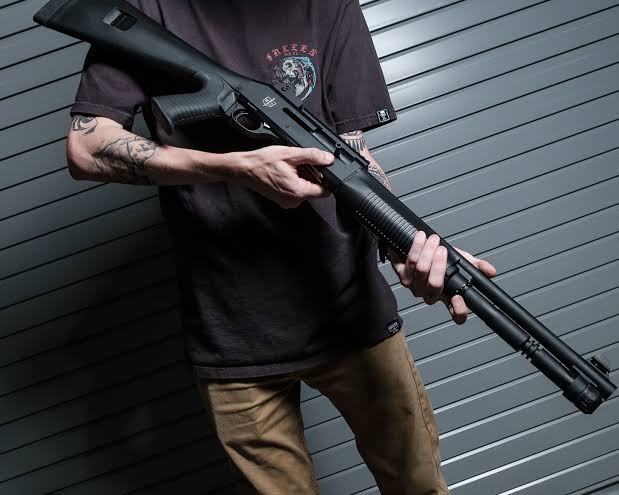
There is no universal winner. The 1014 has a stronger publicly documented identity and a more developed body of independent review coverage. The F12 may be more interesting to someone who specifically wants an AR-style shotgun, but its exact variant and factory package need particularly careful verification because publicly available model-specific documentation is less extensive.
| Collector priority | MAC 1014 | MAC F12 |
|---|---|---|
| Established public review record | Stronger | More limited |
| Familiar traditional shotgun format | Yes | No; AR-style |
| Factory variant identification | Several documented variants | Confirm exact SKU and package |
| Original accessory research | Manuals and review descriptions provide useful baseline | Obtain model-specific manual and original package list |
| Comparison with a well-known reference platform | Benelli M4/M1014 | AR-style shotgun category |
| Best reason to choose it | M4-pattern appearance and documented variants | Preference for the F12’s distinct format |
| Main research caution | Do not confuse it with a Benelli-made M4 | Do not infer specifications from another AR-style shotgun |
The strongest reason to prefer the 1014 from a collector-research standpoint is the amount of independently published information available. American Rifleman published a detailed comparison and awarded the MAC 1014 its 2025 Shotgun of the Year recognition. Outdoor Life also reviewed the 1014 Wood and reported its own experience with that particular sample. These are useful references, but neither review guarantees the condition or performance of a different used example. An Official Journal Of The NRA+2
For the F12, the responsible approach is to avoid filling gaps with specifications from unrelated AR-style shotguns. The model’s appearance alone does not establish magazine capacity, barrel length, included sights, accessory compatibility, or production revision. Obtain those details from the actual model label, manual and manufacturer or importer records.
6. Visual inspection checklist: identifying an original MAC 1014 or F12
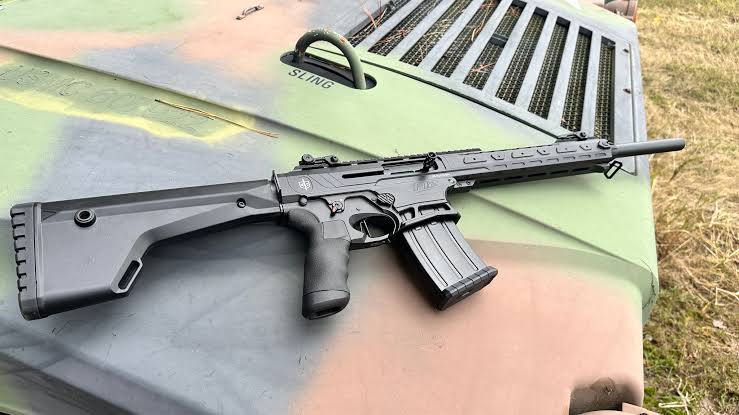
A collector’s inspection should start with identity and documentation, then move to visible condition and originality. It should not begin with assumptions about internal construction or generic machine-gun features.
The following checklist is intended for a non-invasive visual review of an unloaded firearm, with the firearm handled only in accordance with the owner’s manual and applicable safety requirements. It is not a disassembly, repair or function-testing guide. If the firearm’s condition is uncertain, leave the assessment to a qualified gunsmith.
Step 1: Confirm the exact model designation
- Record the model name exactly as it appears on the firearm.
- Compare that designation with the factory box label, manual and any invoice or original sales record.
- Determine whether the firearm is a MAC 1014, a named 1014 variant, or an F12.
- Do not accept a seller’s description as the only evidence of identity.
- If the receiver marking and box label appear inconsistent, ask the manufacturer or importer to clarify the discrepancy before assigning a collector premium.
A model name in an online listing is not sufficient proof of factory configuration. Retailers sometimes use shortened names, generic category descriptions or stock photographs.
Step 2: Record the visible serial and importer markings
- Photograph the serial number and all visible model, importer and country-of-origin markings.
- Compare the markings with the documents supplied by the seller.
- Check whether the markings appear clear and consistent with the finish around them.
- Note any visible evidence that markings may have been obscured, altered or damaged.
- Do not publish a complete serial number in a public listing or article; keep it in private acquisition records.
A serial number is an identifier, not a standalone certificate of authenticity. If the seller claims that a particular serial range corresponds to a rare production run, request documentary support. Avoid treating forum speculation or an unsourced serial-number chart as definitive.
Step 3: Assess the receiver’s exterior condition
Examine the exterior under good lighting. Look for:
- Dents, deep scratches or impact marks.
- Corrosion, pitting or unusual discoloration.
- Visible cracks or deformation.
- Finish wear around exposed edges and contact points.
- Evidence of aftermarket engraving or refinishing.
- A mismatch between the receiver’s apparent age and the seller’s description.
The MAC 1014’s receiver is described in American Rifleman as aluminum, with the MAC logo and model and serial markings. Its review describes a relatively restrained exterior marking scheme. That provides a useful reference for the specific 1014 configuration covered in that article; it should not be assumed to describe every MAC shotgun revision.