
MAC guns blog
Inglis L9A1 Review: The Return of a Classic Military Sidearm – Identification, Authenticity, Value & Buying Guide (2026)
Dec
December 2023 | By: [MacGuns]
An in-depth examination of the modern Inglis L9A1, its British military heritage, Browning Hi-Power lineage, manufacturing characteristics, collector appeal, original accessories, and valuation considerations.
Introduction: The Return of a British Military Classic
Few military handguns have achieved the historical recognition of the Browning Hi-Power. Its distinctive profile, 9mm chambering, high-capacity magazine, and long service history established it as one of the most influential military pistols of the twentieth century.
Among its most recognizable military identities is the British L9A1, a designation associated with the Browning Hi-Power adopted by the British armed forces during the Cold War.
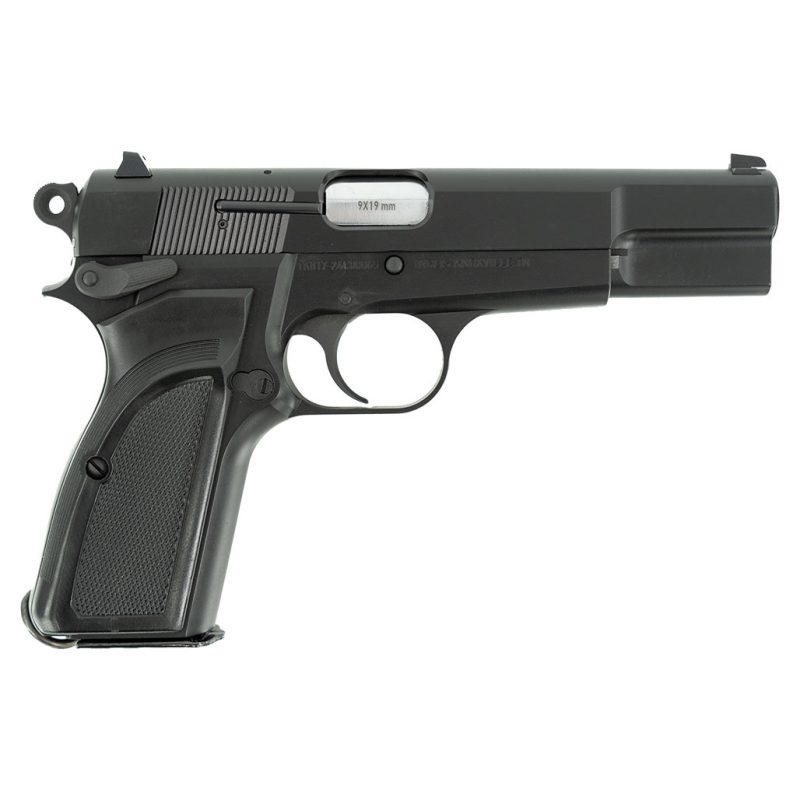
The recent return of the Inglis name to the commercial firearms market has introduced a modern pistol styled after this British military configuration. The new Inglis L9A1 offers collectors and enthusiasts an opportunity to revisit the appearance and heritage of the classic service pistol while considering the advantages and compromises of contemporary manufacturing.
However, understanding the distinction between an original wartime Inglis pistol, a British-service FN L9A1, and the modern Inglis-branded L9A1 is essential.
These are related products, but they are not interchangeable historical identities.
The original Canadian Inglis Hi-Power was manufactured during the Second World War. The British L9A1 designation was subsequently associated with Belgian-made FN Hi-Powers purchased for British service. The modern Inglis L9A1 is a contemporary commercial reproduction inspired by that later military configuration.
For collectors, this distinction determines how authenticity, provenance, originality, accessories, and market value should be evaluated.
This guide approaches the Inglis L9A1 as a historical-style commercial pistol and a collectible representation of a famous military sidearm. It also examines the older military examples that establish its historical significance.
Important identification note: The Inglis L9A1 is a conventional semiautomatic Browning Hi-Power-pattern pistol. It does not use a welded receiver construction or a submachine-gun-style fire selector. Nomex barrel covers and original two-stage suppressors are not established standard L9A1 package accessories. Those items should not be treated as evidence of factory originality or used to inflate a collector valuation.
1. Understanding the Inglis L9A1: Historical Background and Development
The Browning Hi-Power legacy
The Browning Hi-Power emerged from the development of a new military service pistol for the Belgian manufacturer Fabrique Nationale.
John Moses Browning began the original design work, while Dieudonné Saive played a central role in completing and refining the pistol.
The resulting design became known as the Grande Puissance, or High Power.
Its 9mm chambering, steel construction, distinctive grip profile, and double-column magazine made it attractive to military organizations seeking a modern service handgun.
The pistol entered production in Belgium in the 1930s.
Its subsequent history was shaped by the Second World War, during which production and military distribution became complicated by the German occupation of Belgium.
Canadian Inglis production during the Second World War
Canadian manufacturer John Inglis and Company undertook production of the Browning Hi-Power during the wartime period.
Production began in 1944, with Canadian manufacturing arrangements supported by personnel and technical knowledge associated with FN.
The Canadian pistols became particularly important to Allied military procurement.
Two major configurations were manufactured:
- No. 1: Associated with the Chinese contract, tangent rear sight, and shoulder-stock provision.
- No. 2: Associated with Canadian and British military requirements, with a conventional fixed rear sight.
The No. 1 and No. 2 designations are important because they describe distinct historical configurations.
The original Canadian production should not be confused with the modern Inglis L9A1.
The British adoption of the Browning Hi-Power
The British military’s relationship with the Browning Hi-Power began before the formal adoption of the L9A1.
During the Second World War, Canadian-made Inglis pistols were used by British and Commonwealth forces, including units that appreciated the pistol’s capacity and practical military configuration.
However, Britain continued to use the Enfield No. 2 revolver as its principal standard service handgun after the war.
The formal change came in the 1950s, when the British adopted the Browning Hi-Power as the Pistol Automatic L9A1.
British procurement subsequently involved Belgian-made FN pistols rather than a continuation of Canadian Inglis production.
From 1964 onward, Britain purchased additional FN-manufactured pistols for military service.
These examples are especially important when studying the L9A1 identity.
The British military designation therefore belongs to a later chapter of Browning Hi-Power history, not simply to the wartime Canadian production program.
The L9A1 in British military service
The L9A1 became associated with British military service across several decades.
Its history includes service during:
- Northern Ireland operations.
- Aden.
- The Falklands conflict.
- The Gulf War.
- Operations in Afghanistan.
The pistol remained in British service until its replacement by the Glock 17, designated L131A1, beginning in 2013.
Its long service history established the L9A1 as an important symbol of British military small-arms development.
For collectors, the attraction is not limited to the physical pistol. It also includes the military history represented by the designation, markings, service equipment, and documentation.
The modern Inglis L9A1
The modern Inglis-branded L9A1 is part of the commercial revival of the Inglis name by the SDS Arms group.
The company introduced its new Inglis Hi-Power family around 2024, including the L9A1-style model and other commercial variations.
The modern L9A1 is manufactured in Türkiye and marketed as a contemporary interpretation of the British military-style Hi-Power.
It is not a newly discovered wartime Inglis pistol, nor is it an original FN-manufactured British military L9A1.
Its appeal is different: it combines recognizable military styling with modern commercial production.
This distinction is essential when purchasing or writing about the pistol.
A modern Inglis L9A1 may be an attractive addition to a collection of military-inspired handguns, but it cannot legitimately be valued as an original Second World War or British-service firearm.
2. Three Important Inglis and L9A1 Identities
Collectors should separate three categories before evaluating an example.
A. Original Canadian Inglis Hi-Power
These pistols were manufactured by John Inglis and Company during the Second World War.
They are historically significant Canadian military firearms.
Their appeal includes:
- Canadian wartime production.
- CH and T-associated serial-number systems.
- No. 1 and No. 2 configurations.
- Original wartime markings.
- Canadian and Commonwealth military associations.
- Period accessories and documentation.
B. Original British-service L9A1
These are principally Belgian-made FN Browning Hi-Powers associated with British military procurement.
Their collector appeal includes:
- FN manufacturing identity.
- British service designation.
- British Broad Arrow acceptance markings.
- NATO stock-number identification.
- Military refurbishment history.
- Service-related documentation.
- Period military accessories.
The L9A1 designation is particularly important here.
An original British-service pistol should not be described as Canadian-manufactured merely because it is being compared with the Inglis wartime pistols.
C. Modern commercial Inglis L9A1
The modern Inglis L9A1 is a contemporary commercial pistol manufactured in Türkiye.
Its defining characteristics include:
- Modern production.
- Inglis commercial branding.
- Military-inspired external styling.
- Black protective finish.
- Polymer grips.
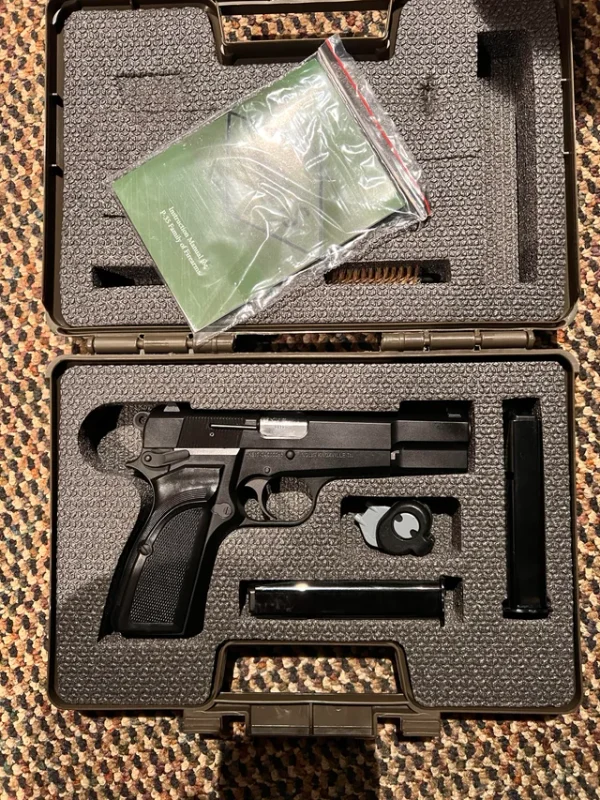
- Contemporary commercial packaging.
- Modern magazines and accessories.
Its value should be evaluated as a modern commercial firearm, not as a vintage military artifact.
Historical identity comparison
| Identification category | Canadian Inglis Hi-Power | British-service L9A1 | Modern Inglis L9A1 |
|---|---|---|---|
| Manufacturing period | 1944–1945 | Postwar, principally 1960s onward procurement | Modern commercial production |
| Country of manufacture | Canada | Belgium | Türkiye |
| Manufacturer | John Inglis and Company | Fabrique Nationale | Modern Inglis/SDS Arms production |
| Historical role | Second World War military production | British military service pistol | Commercial military-style reproduction |
| Primary markings | Inglis and Canadian production markings | FN markings and British military identifiers | Modern Inglis markings |
| Collector category | Vintage military collectible | Military-surplus collectible | Contemporary commercial collectible |
| Provenance importance | Very high | Very high | Commercial documentation and condition |
| Original wartime status | Yes | No, later service production | No |
This table should be the starting point for any serious appraisal.
A seller advertising a modern Inglis L9A1 as an original British military pistol is misrepresenting its manufacturing history.
3. Modern Inglis L9A1: Features and Collector Appeal
The modern Inglis L9A1 is designed to recall the understated appearance of British military Hi-Powers.
It avoids some of the decorative features found on commercial sporting versions and emphasizes a practical military-style presentation.
General specifications
The following specifications are reported for the modern commercial model in published product coverage.
| Specification | Reported characteristic |
|---|---|
| Manufacturer | Inglis |
| Production country | Türkiye |
| Pattern | Browning Hi-Power |
| Chambering | 9mm Luger |
| Barrel length | Approximately 4.65 inches |
| Overall length | Approximately 7.8 inches |
| Weight | Approximately 32.1 ounces with empty magazine |
| Frame construction | Steel |
| Slide construction | Steel |
| Magazine capacity | 15 rounds |
| Standard magazine package | Two magazines in the reviewed configuration |
| Finish | Black Cerakote over Parkerized finish |
| Grips | Black polymer |
| Safety configuration | Ambidextrous manual thumb safety |
| Sights | Three-bar style sights |
| Commercial positioning | British military-style Hi-Power |
Specifications and package contents should be confirmed against the exact production revision and seller documentation.
The modern pistol should not be assumed to have identical features to every original FN L9A1.
External appearance
The modern L9A1 retains the familiar Hi-Power outline.
Its relatively slender slide, steel frame, rounded grip profile, and military-style finish give it a recognizable service-pistol appearance.
The black finish provides a practical contemporary presentation.
The polymer grips reinforce the postwar military styling rather than the wooden grip appearance associated with many wartime Canadian examples.
The lanyard attachment also contributes to its military character.
Manufacturing identity
A particularly important feature is the modern manufacturer’s origin marking.
The new pistol is produced in Türkiye, a fact that should be reflected accurately in any collector listing.
The word Inglis on the modern pistol identifies the revived commercial brand.
It does not establish manufacture by the original Toronto-based John Inglis company.
This is one of the most important distinctions for future resale and insurance documentation.
Why collectors may find it appealing
The modern L9A1 has several potential attractions:
- It represents a recognizable British military service-pistol configuration.
- It offers a contemporary interpretation of an established historical design.
- It provides an alternative to more decorative commercial Hi-Power variants.
- Its commercial availability can make it easier to acquire than an original military-surplus example.
- It offers an accessible starting point for collectors studying the L9A1’s service history.
Its value, however, should be based on the modern pistol’s actual market position rather than the historical rarity of original military examples.
4. Visual Identification Checklist: What to Examine Before Buying
A collector’s examination should begin with establishing which of the three historical identities is being offered.
The modern Inglis L9A1, original British FN L9A1, and wartime Canadian Inglis are related but distinct products.
The following checklist emphasizes external identification, originality, documentation, and visible condition rather than mechanical modification or internal servicing.
A. Manufacturer and production-origin identification
Start by confirming the manufacturer’s identity.
For a modern Inglis L9A1, examine the commercial manufacturer markings and country-of-origin identification.
Record:
- Inglis branding.
- Model designation.
- Country-of-origin marking.
- Caliber designation.
- Commercial serial identification.
- Available manufacturer’s documentation.
- Original purchase records, where available.
The production origin is a particularly important factor.
A modern Turkish-made pistol should not be advertised as an original Canadian wartime Inglis.
Similarly, an original Belgian FN L9A1 should not be described as a modern commercial Inglis.
B. Slide markings and rollmarks
The slide is one of the most useful areas for external identification.
Compare the visible manufacturer and model markings with documentation for the exact pistol being evaluated.
Look for:
- Correct manufacturer identification.
- Consistent model designation.
- Caliber marking.
- Commercial proof and country-of-origin markings.
- Serial identification where applicable.
- Evidence of aftermarket engraving.
- Unusual markings not supported by the production documentation.
The modern Inglis L9A1 uses comparatively understated markings.
Original British-service FN pistols can display more extensive military identification, including the British L9A1 designation and NATO stock-number information.
The difference is significant.
A modern commercial pistol should not be assigned an original British military identity simply because its appearance resembles an issued L9A1.
C. Frame identification
The frame is another important area for establishing originality.
For a modern commercial pistol, record its visible manufacturer and serial identification and compare it with the supplied paperwork.
Look for:
- Consistency between the pistol and its documentation.
- Visible signs of corrosion.
- Unusual surface discoloration.
- Evidence of aftermarket engraving.
- Damage to external surfaces.
- Signs of refinishing.
- Unexplained differences between the frame and slide appearance.
Receiver-weld inspection is not applicable to this model.
The Inglis L9A1 uses a conventional Browning Hi-Power-pattern steel frame and slide. It does not have the welded receiver construction associated with certain other firearm platforms.
A collector should not use weld appearance as an authentication criterion.
D. Safety identification
The modern Inglis L9A1 has an ambidextrous manual thumb safety.
This is a conventional semiautomatic-pistol safety arrangement.
It should not be confused with the fire-selector systems used on automatic firearms.
For external identification, note:
- Whether the safety arrangement matches the documented commercial model.
- Whether visible components appear consistent with the production version.
- Whether there are signs of aftermarket replacement.
- Whether the finish is consistent with the surrounding frame.
- Whether the seller has disclosed modifications.
Original British and commercial Hi-Power variants may differ in their external safety arrangements.
Consequently, the exact production identity must be established before drawing conclusions about originality.
E. Original finish versus refinishing
Finish condition is an important part of modern and vintage firearm appraisal.
The modern Inglis L9A1 is marketed with a black Cerakote finish over a Parkerized finish.
This is different from the historical finish characteristics of original wartime Inglis pistols and earlier FN military production.
For a modern example, examine:
- Uniformity of the external finish.
- Visible scratches.
- Chips or areas of finish loss.
- Discoloration.
- Evidence of corrosion.
- Whether the finish matches the seller’s description.
- Any disclosed refinishing or cosmetic restoration.
A modern Cerakote finish should not be described as original wartime Parkerizing.
For original Canadian Inglis pistols, historical finish evaluation requires a different approach.
Their serial numbers were applied after finishing, and surviving original examples can show exposed bright metal within the engraved numbers.
This is an important historical observation, but it should not be used as the sole authentication test.
For original British FN L9A1 pistols, the relevant comparison is with documented FN production and subsequent British military refurbishment practices.
F. Grip panels and external furniture
The modern L9A1 is equipped with black polymer grips.
Collectors should examine:
- Whether the grip panels are consistent with the commercial model.
- Whether the manufacturer’s original packaging includes the expected grips.
- Whether there are cracks or visible damage.
- Whether the panels appear to be replacements.
- Whether the seller discloses aftermarket furniture.
For original Canadian Inglis pistols, wooden grips are historically relevant.
For British-service L9A1 examples, postwar military-style synthetic grip panels are an important part of the later service-pistol appearance.
These differences should not be confused when assessing a collection containing several Hi-Power generations.
G. External barrel and identification markings
The barrel contributes to the pistol’s identification and historical documentation.
A collector should record the visible caliber identification and any available serial or proof markings.
Compare the appearance with manufacturer documentation for the specific commercial or milita