
MAC guns blog
Hard-to-Find Firearms That Collectors and Enthusiasts Value: 9 Notable Models Worth Knowing
Oct

Hard-to-Find Firearms: Where Engineering, History, Craftsmanship, and Collecting Heritage Come Together. An in-depth exploration of firearm history, engineering, manufacturing heritage, collector interest, and the characteristics that can make certain firearms particularly noteworthy in the collecting community.
The firearms collecting world encompasses a fascinating combination of mechanical engineering, industrial history, craftsmanship, historical significance, and design innovation. While some firearms were manufactured in substantial quantities, others have become increasingly difficult to encounter because of discontinued production, limited configurations, specialized manufacturing, or their place in a particular period of firearms development.
For collectors and enthusiasts, the appeal of a firearm is rarely determined by its age alone. Historical importance, originality, documented provenance, manufacturing quality, condition, and the reputation of its manufacturer can all influence how a particular model is regarded.
Some firearms become recognizable classics because they introduced distinctive engineering concepts. Others attract attention because they represent an important chapter in a manufacturer’s history or preserve a particular design philosophy that is no longer common in contemporary production.
Among the models frequently discussed in collector circles are the Benelli M3, Colt 1911 variants, Heckler & Koch P7, Kel-Tec SU-16, Kimber Super Match II, SIG Sauer P226 X5, Smith & Wesson Model 645, Springfield Armory V12, and Springfield SA-35.
These nine firearms represent different categories, manufacturing traditions, and periods of development. Examining them provides an opportunity to understand why certain models become historically interesting and why collectors place particular importance on accurate identification and documentation.
An important distinction is that collector interest does not automatically establish rarity or guarantee financial appreciation. Actual market values vary by jurisdiction, condition, configuration, provenance, and independently verified market information.
1. Benelli M3: A Distinctive Shotgun with an Important Engineering Legacy

The Benelli M3 occupies an interesting position in the history of modern shotgun development. Manufactured by the Italian company Benelli, the M3 is recognized for its distinctive engineering concept and its place within the company’s broader Super 90 family.
One reason the Benelli M3 attracts attention from firearms enthusiasts is its unusual combination of historical design characteristics and manufacturing identity. Rather than being remembered simply as another shotgun model, it represents a particular period in which manufacturers explored different approaches to operating systems and mechanical design.
Benelli has built its international reputation around research, manufacturing quality, and innovation in shotgun engineering. The company’s history dates to 1967, when Benelli Armi was established in Urbino, Italy. Its subsequent development helped establish a recognizable identity in the international shotgun industry. Benelli+1
For collectors, the Benelli M3 is interesting because of its association with the Super 90 family and its distinctive convertible operating-system concept. Different production configurations, historical documentation, and manufacturing periods can make individual examples more interesting than others.
The collector conversation should distinguish between the general M3 designation and specific historical variants. A standard production example does not necessarily have the same collecting significance as a documented special configuration or an example with an interesting manufacturing history.
Condition and originality are also important considerations. Collectors generally pay attention to the completeness of original components, exterior condition, markings, accompanying documentation, and evidence of previous modifications.
The Benelli M3 demonstrates how engineering identity can contribute to long-term historical interest. Its significance is not simply about scarcity; it is also about its recognizable place in the evolution of modern shotgun design.
2. Colt 1911s: An Enduring American Firearms Classic
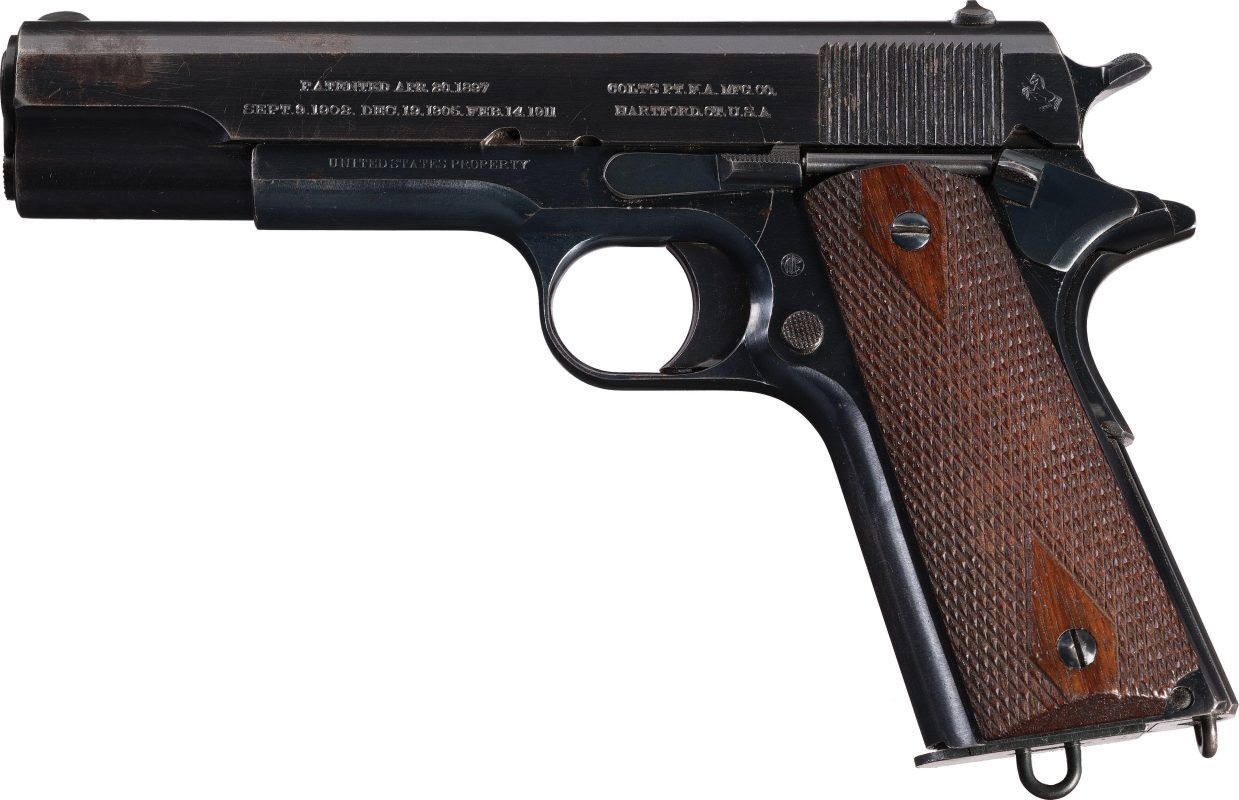
Few firearm designs have achieved the historical recognition of the Colt 1911. Developed by John Moses Browning and adopted by the United States military in 1911, the pistol became one of the most influential handgun designs in American history.
The Colt 1911 is particularly interesting to collectors because its history extends across multiple generations, military periods, manufacturing contracts, and commercial variations.
The design served as the standard American military sidearm for decades. Its historical importance is documented by institutions such as the Smithsonian National Museum of American History, which preserves examples associated with its military service. National Museum of American History+1
Why Colt 1911 variants attract collectors
The term Colt 1911 covers a broad historical category rather than one single collectible configuration.
Collectors may distinguish between:
- Early commercial production examples.
- Original military-issued M1911 pistols.
- M1911A1 military variants.
- National Match and competition-oriented models.
- Historically documented government-contract examples.
- Special commemorative and limited-edition production.
- Examples with significant military or institutional provenance.
The distinction between these categories matters because two pistols carrying the same general model designation may have very different historical significance.
Originality is particularly important in the Colt 1911 collecting community. Original finishes, factory markings, period-correct components, and credible historical records can contribute to the significance of an individual example.
Military provenance can also be important. A pistol with verifiable service documentation may have a different historical story from an otherwise similar commercial example.
Another important consideration is the difference between historical firearms and modern reproductions. Although contemporary 1911-style pistols may preserve the original design language, they should not automatically be treated as equivalent to historically significant Colt-manufactured examples.
The Colt 1911 remains a particularly compelling collecting subject because it combines American manufacturing history, influential engineering, military heritage, and a long commercial legacy.
3. Heckler & Koch P7: The Unusual German Pistol
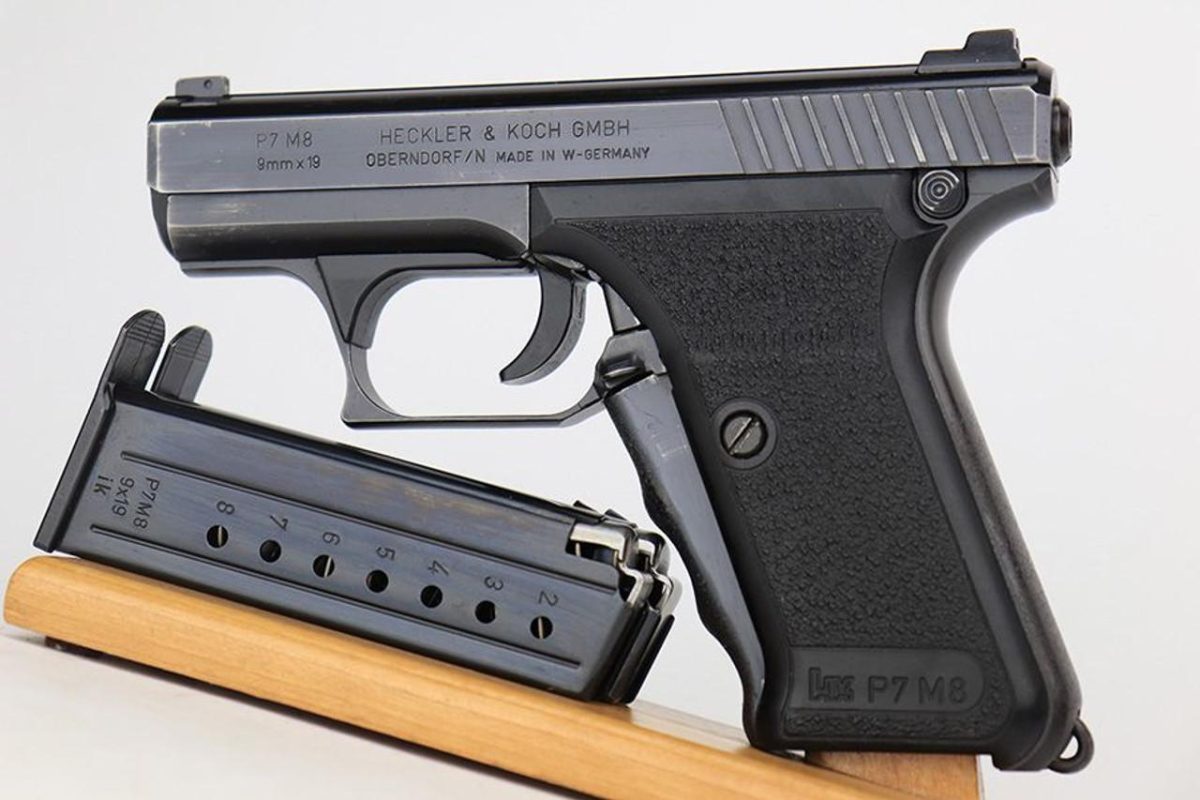
The Heckler & Koch P7 is one of the most distinctive pistols in modern European firearms history.
Developed during the 1970s, the P7 became known for its unusual squeeze-cocking mechanism and unconventional engineering approach.
Unlike many contemporary handguns, the P7 incorporated a distinctive mechanism into the forward portion of its grip. This design identity made it immediately recognizable and contributed to its reputation as an unusual example of German mechanical engineering.
The P7 entered production in 1979 and was adopted by several German law-enforcement organizations. Its development also placed it within the wider international discussion surrounding police and military handgun modernization. An Official Journal Of The NRA+1
What makes the HK P7 historically interesting?
The P7 is particularly notable because of its mechanical individuality.
Its design demonstrates how manufacturers sometimes pursue engineering solutions that differ considerably from the dominant approaches of their time.
Several historical variations emerged, including the PSP, P7M8, and P7M13. These variants are important to collectors because they represent different stages in the model’s development.
The production history is another important consideration. Heckler & Koch discontinued the P7 family in 2008, contributing to its position as a discontinued historical design. An Official Journal Of The NRA+1
For collectors, the P7 offers several areas of historical interest:
- German manufacturing heritage.
- Distinctive mechanical design.
- Documented police and institutional history.
- Different historical model variations.
- Original factory markings.
- Production and import documentation.
The P7 also illustrates an important principle in collecting: a firearm can become desirable because of its engineering individuality, even when it was ne